History

2010

CY Holding was established as the principal holding entity for the Group's businesses and investments.

1925
Riyao Hang
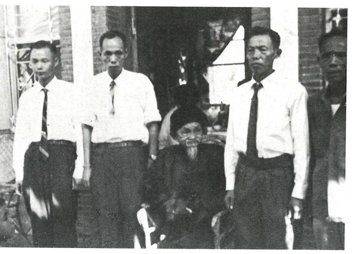
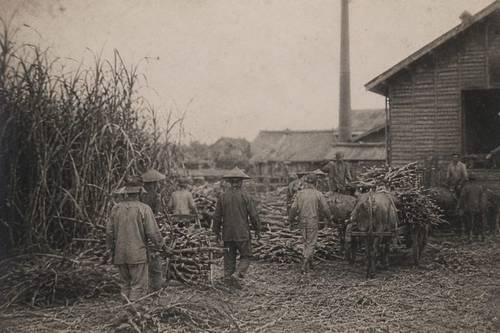
In 1912, CY Li's father founded Riyao Hang, beginning with tea cultivation and export before relocating to Chiayi County to expand into sugarcane and rice — supplying Japanese-owned sugar companies and laying the family's first industrial base. In 1925, second-generation founder CY Li was born upon this foundation.
Taiwan · 1925
Parliamentary Petition · Cultural Enlightenment
Democratic awakening takes root
The Taiwan Cultural Association held enlightenment lectures across the island as Chiang Wei-shui and Lin Hsien-tang advanced the Taiwan Parliament Petition Movement. From 1925 farmers' unions formed island-wide; civil society accelerated and democratic self-awareness took root in colonial soil.
1943
Governor-General's Works Bureau
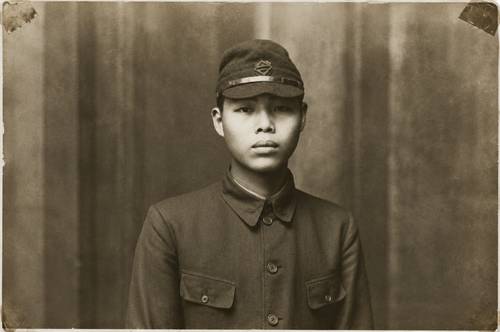
At just eighteen, founder CY Li joined the Works Bureau of the Governor-General's Office, grounding himself in Japanese architecture and the engineering-construction system.
Taiwan · 1943
Late Pacific War
Wartime mobilization
As the Pacific War entered its final phase, Taiwan shifted to a wartime footing. The colonial government accelerated infrastructure and administrative consolidation, and the Governor-General's engineering system reached its peak scale.
1945 — 1949 · Interregnum
1945
End of WWII · Retrocession
Taiwan returns to the ROC
With the end of WWII and Japan's surrender, Taiwan formally returned to the Republic of China. A large wave of soldiers and civilians relocated from the mainland, and Taiwan entered a period of sweeping political and economic reconstruction.
1949
ROC Government Relocates to Taiwan
Taipei becomes the capital
After the Chinese Civil War, the Republic of China government relocated to Taiwan and Taipei became the capital. Martial law was imposed while land reform began, laying the groundwork for the later economic take-off.
1956
Taipei Reconstruction
The Riyao Hang family relocated to Taipei. Drawing on his Works Bureau credentials, founder CY Li devoted himself to post-war national reconstruction in Taipei — public works, government buildings and infrastructure.
1958
CY and Partners
Founding an architecture practice centred on design excellence, engineering management and property investment — the enterprise's first step.
Taiwan · 1958
The 823 Bombardment
Prelude to the economic miracle
The PRC shelled Kinmen, triggering the Second Taiwan Strait Crisis and raising tensions. That year economic construction accelerated as export-oriented industrial policy began, opening the prelude to Taiwan's economic miracle.
重耀建築 印記
1968
Fuchu General Contractor
The founder's cousin established Fuchu General Contractor, the group's affiliated builder, extending architectural design into construction execution and forming a vertically integrated 'design–build' capability that would underpin later mixed-use projects.
Taiwan · 1968
Nine-Year Compulsory Education
Building the talent base
Taiwan extended compulsory education from six to nine years, building the talent base for the coming take-off. Growth continued as export-processing zones drove industrialization and construction demand surged.
1979
National Institute of Building Technology
Founder CY Li established the National Institute of Building Technology, institutionalizing Taiwan's building-engineering profession and creating shared technical standards and a platform for academic exchange.
Taiwan · 1979
The Formosa Incident
A democratic turning point
The Formosa Incident erupted, a pivotal turn in Taiwan's democratic movement. Growth continued, and construction entered a golden age driven by the Ten Major Construction Projects.
印記
1983
Beyond North Asia
The group ventured beyond North Asia for the first time, making its initial overseas investments in North and Central America — a trans-Pacific capital strategy extending the family's work to global markets.
Taiwan · 1983
Era of the Four Asian Tigers
Export-led expansion
Taiwan, with Hong Kong, South Korea and Singapore, became one of the Four Asian Tigers. Export-led industry expanded rapidly and the Hsinchu Science Park accelerated the tech sector in a pivotal decade of transformation.
1989
CY Construction
HJ Li founded the engineering company, carrying project-management discipline into construction execution — architecture and engineering forming the group's two pillars of vertical integration.
Taiwan · 1989
Post-Martial-Law Transition
Civil society flourishes
Taiwan lifted 38 years of martial law in 1987, entering democratic transition. On the eve of the 1990 Wild Lily movement, civil society flourished and democratization deepened.
1992
National Symposium
The group hosted a national construction symposium, convening government, academia and industry to chart Taiwan's development — a mark of its influence and responsibility in national policy debate.
Taiwan · 1992
Full Legislative Re-election
A democratic milestone
Taiwan completed a full re-election of its legislature, ending the era of the long-serving parliament and reaching a major democratic milestone. A six-year national development plan sharply expanded infrastructure investment.
1996
Kainan Institute
Now Kainan University
Founder CY Li helped his alma mater establish the Kainan Institute of Management, returning decades of building and engineering experience to education and cultivating Taiwan's next generation of management talent.
Taiwan · 1996
First Direct Presidential Election
Landmark of democratization
Taiwan held its first direct presidential election; Lee Teng-hui was elected the ninth President — a landmark in democratization and the first directly elected head of state in the Chinese-speaking world.
2005
Chairman HJ Li
After fifteen years within the group, HJ Li formally assumed the chairmanship, completing a smooth first-to-second-generation succession and leading the group into a new era of global positioning and capital expansion.
Taiwan · 2005
The Lien–Hu Meeting
Cross-strait détente
KMT chairman Lien Chan visited Beijing for a historic meeting with CCP General Secretary Hu Jintao, opening a decade of cross-strait détente. Taiwan deepened its integration into global supply chains as electronics manufacturing peaked.
HJ Li 簽名
2007
CY Development
HJ Li founded CY Development, expanding into diversified real estate and hospitality and leading the group into a new phase of growth with entrepreneurial drive.
Taiwan · 2007
Global Economic Integration
Tech and property rise together
Taiwan's semiconductor and technology industries secured a pivotal place in global supply chains, with TSMC becoming the world's foundry leader. A buoyant property market lifted Taipei among Asia's major financial cities.
2010
CY Holding
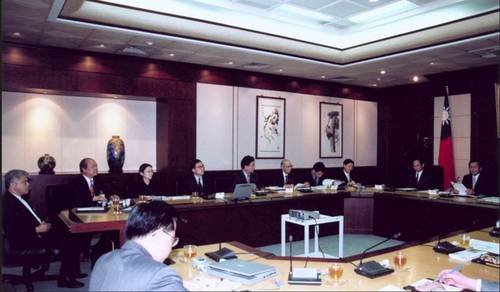
Consolidating the group's assets under an investment-holding company, establishing financial-capital management and opening a new chapter of technology-sector investment.
Taiwan · 2010
GDP Grows 10.9%
Strong post-crisis rebound
Taiwan's GDP grew 10.9%, the highest among the Four Asian Tigers and one of the strongest post-crisis recoveries worldwide. Capital markets were buoyant, bringing fresh growth opportunities in property and investment.
印記
2015
Across Asia
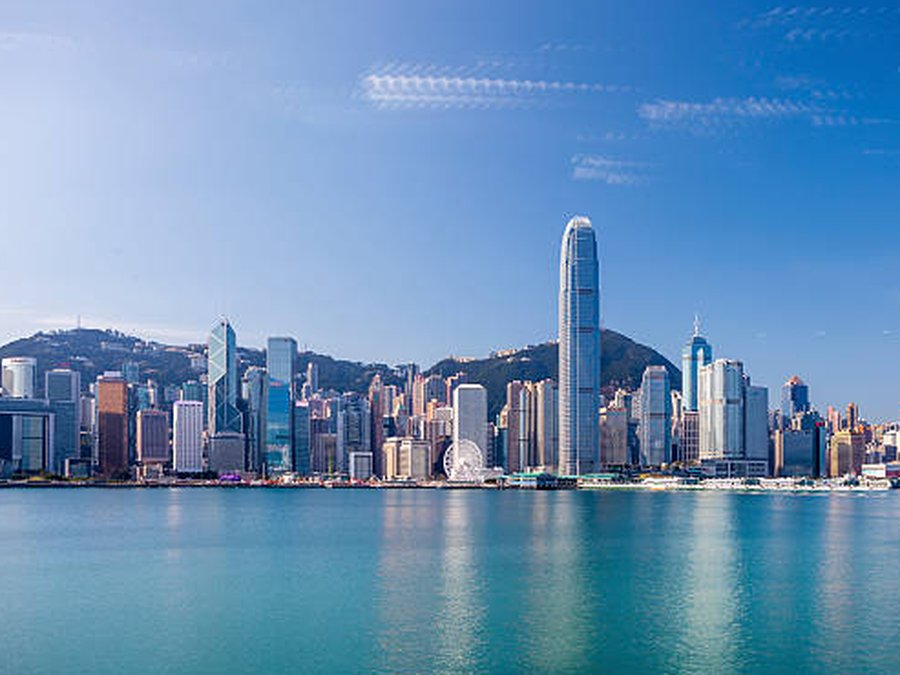
The group extended its footprint to Hong Kong, Japan and Korea, building cross-market capital allocation beyond Taiwan and deepening a diversified, cross-regional, cross-asset strategy.
Taiwan · 2015
Electronics Export Peak
Key role in global supply chains
Taiwan's electronics manufacturing reached an export peak, playing an indispensable role in the global smartphone and consumer-electronics supply chain as outbound investment entered a new phase.
2021
Institutional Era
CY Holding established partnerships with global limited partners (LPs), marking its expansion into global capital markets and private equity, alongside a dual-track strategy spanning operating assets and financial investments.
Taiwan · 2021
Taiwan in the spotlight
Semiconductors at the core
Its semiconductor industry became the core of the global supply chain as TSMC began overseas expansion. Amid COVID-19, Taiwan's public-health response and economic resilience won international recognition; capital markets were buoyant and the MSCI Taiwan Index reached a record high.